Jul 18, 2010

Cover art for the e-book edition of Robert Jordan's Crossroads of Twilight


The days when I actively cared about The Wheel of Time are long behind me, but I keep being amazed by the awesome covers e-book editions get. Why, I ask, didn't the hard copies look this way? Even Memory of Light has that ghastly "the problems of gas" cover...

Jul 17, 2010

Malazan: The early books - Genabackis


After describing the Malazan world, it is time to go into the novels themselves. However, the story of the Malazan Book of the Fallen is way too complicated to go book by book. In the first five installments of the series three major plot-lines are presented, on three separate continents. Characters sometimes jump from one to the other, but mostly they are almost completely self-contained until book six, The Bonehunters, where they start to merge. So, I have decided to separate my first posts on the series into plot-lines instead of books. This entry covers the continent of Genabackis, where the first and third novels are set.

Gardens of the Moon begins with the siege of the city of Pale in northern Genabackis - another step in the conquering campaign of the Malazan Empire. As Pale falls, seemingly abandoned by its allies - the Tiste Andii of Moon's Spawn - Empress Laseen sets her gaze on Darujhistan - the jewel of the continent, and its richest city. The few surviving Bridgeburners - an elite group of soldiers, lead by the legendary Sergeant Whiskeyjack - are sent before the army, to ensure victory from within. But many powers gather to prevent Laseen's insatiable conquest. Anomander Rake, the Son of Darkness, allies himself with Darujhistan, while the Ascendants of High House Shadow - the gods Shadowthrone and his right hand Cotillion - have their own reasons of wanting to hurt the Malazan Empire. Meanwhile Oponn - the twin-gods of Chance - play a game in which two mortals become their unwitting pawns. And as powerful forces converge on Darujhistan, and a few mundane humans try to stay alive amidst the onslaught, an ancient creature stirs in the outskirts of the city - one mighty enough to shatter all carefully arranged plans in its icy fist.

The beginning of the Malazan Book of the Fallen has a few faults that prevent it from appealing to the broad audience. One of those is the fact that Erikson chooses to literally thrust you into the middle of a raging battle. As the reader finds himself among the soldiers of the siege of Pale, he is drowned under a wave of names, relationships and history that he knows nothing about. True, it takes less than fifty pages to find your way to the surface of those dark waters, but it is an unfriendly beginning to say the least, and many people don't like being treated in that way. Then follow the "GotMisms", so named because they are incongruities specific to the first book - things that contradict facts, established in further installments. Nothing particularly major though, and definitely nothing that steals from the enjoyment of the book. Steven Erikson's style is still a bit tentative here, not daring (or simply not yet matured enough) to unleash his full potential. Still, the quality of his writing is high, even if some parts are chunkier than others.

In the end, Gardens of the Moon is not even half as good as the books that follow it, but still remains among the best in the genre, and sets the scene for most of the major plot-lines that comprise the series. I would strongly recommend giving it a chance, and if after it you are unsure as to where you stand with Steven Erikson - plunging directly into Deadhouse Gates. By its end you will know.

7/10


Book three, Memories of Ice, continues the story of those left on Genabackis. After the disastrous events of Gardens of the Moon, the survivors have forged new alliances, as an unexpected threat has risen in the southern part of the continent - the Pannion Domin and its mysterious leader, the Pannion Seer. The Domin conquers and literally devours every land on its way north, and the fragile alliance of powers forged to stop it is nowhere nearly enough to defeat it. Until the undead hordes of the T'lann Imass emerge to join the battle, following a new call to arms and the tiniest glimmer of something that has long been buried under the ash of millenia - hope.

Meanwhile, in the city of Capustan, the mercenary army of the Gray Swords must defend against the cannibalistic tide of the Domin, while hoping against hope that help will come from outside. And underneath it all, something poisons the Warrens themselves, turning traveling through them, and even the simple use of magic into a deadly perilous affair. Bridgeburner mage Quick Ben is bent on unraveling this mystery, before magic becomes completely unaccessible.

Memories of Ice finally gives us the main "villain" of the series, if he could be called such. The Crippled God, fallen from the skies after being summoned from a place outside of the Malazan plane and its Warrens, has been chained by a host of Ascendants, but he still manages to touch the world both directly, and through those he bends to his purposes. And his power is growing...

The third installment in the Malazan Book of the Fallen was for a long time my favorite. After rereading it, I realized that its main appeal is in the thunderous revelations and plot-twists it contains, and thus the experience diminishes after the first time. Still, Memories of Ice is undoubtedly one of the best books in the series, especially due to the fact that it is centered mostly around the T'lan Imass and their tragic fate. Also, together with book two, it boasts the most epic, emotionally engaging and truly "heroic" ending in the series so far. The intensity of emotion is so huge, that I can't read its last fifty pages without putting the book down for short rests. Erikson's style, after its sudden bloom in book two, Deadhouse Gates, is in top shape here, finding perfect balance between exuberance and narrative flow (one which the author will, regrettably, lose in later installments). The novel is a fast read, despite its scope and the rich descriptive prose used to paint its chaotic world.

In the end, Memories of Ice is Steven Erikson at his very best, proving that the Malazan Book of the Fallen is a bar setter and a series to be reckoned with. The book is among the very few greatest examples of what Fantasy is capable of, and an unquestionable must read.

9/10


Next: Malazan: The early books - Seven Cities

Jul 16, 2010

Buffy The Vampire Slayer - Season 1


Words could hardly express my adoration for the "Buffyverse" (the shared world of Buffy the Vampire Slayer and Angel) and my respect for its creator, Joss Whedon. It is easy to scoff at those shows, with their cheap special effects and unrealistic premises. But if one but looks with unbiased eyes, it is even easier to fall in love with their deep characters, the complex relationships between them, the underlying themes in each episode, and the brilliant dialogues. What Joss Whedon has given us with Buffy and Angel is something that has rarely, if ever, happened on TV - not just entertainment, but an experience, something which changes us, if only a little. And I really love those shows. Not with the fervor of a fanboy, but with the respect and fondness of someone who felt the characters of the Buffyverse come to life before his eyes, and become his friends, even if for a short while. See, I cared for them. And still do.

Recently I decided to rewatch the shows, and I thought I might as well express my geekness in written form, season by season. I am aware that most of you probably have either watched them, or do not care to, but for the sake of those who haven't and maybe some day would, I will review the seasons without spoilers.

In Buffy the Vampire Slayer, Season 1 we meet Buffy Summers (Sarah Michelle Gellar) - a 16-year old California girl who just moved into the little town of Sunnydale with her mother, after being kicked out of her school in LA for torching the gymnasium. In her first day at Sunnydale High, she meets two outcasts who will quickly become her best friends, and the core of the show's cast - science geek Willow (Alyson Hannigan) and goofy slacker Xander (Nicholas Brendon) - as well as the British librarian Mr. Giles (Anthony Steward Head), and the mysterious Angel (David Boreanaz), both of whom know entirely too much about her. Because Buffy is the Slayer - one who is born into each generation to fight vampires and the forces of darkness. And Giles is a Watcher, sent to guide and teach her. Only, Buffy doesn't really fall in line with what is expected of her, and often her teenage girl problems take precedence over world-saving. But then the Master - an ancient and powerful vampire - threatens to escape from his prison in the Hellmouth under Sunnydale (a vortex of mystical energy, which also acts as a portal to the demonic dimensions), and it is up to Buffy and her friends to stop him.

Season 1 is a tentative first step in what will be one of the greatest TV shows of all time. It is nowhere near the quality of the following seasons, but even here the traces of what is to come are visible. The first two episodes - "Welcome to the Hellmouth" and "Harvest" - comprise the two parts of the pilot. After only half an hour of watching it, we feel as if we've known these characters for years, as small details are scattered all over the place, giving flesh and depth to what could easily have been card-board one-liner delivery devices.

Episodes worth mentioning are the hilariously over-the-top "Teacher's Pet" with its kitsch sexy Giant Preying Mantis slash Biology Teacher villainess, as well as "Angel", which was one of the biggest shockers of the 90s (its plot-twist regrettably long since ruined by Angel's pop-culture popularity). This season also offers two of the best episode endings I've seen anywhere on TV, in terms of comedic timing - those of "I, Robot... You, Jane" and "The Puppet Show". But nothing shines as bright as the season finale - "Prophecy Girl". Directed by Joss Whedon himself, it raises the overall quality of the show almost to the heights that it will reach by the end of its run. The very real drama of the Slayer who is also a very scared 16-year old girl who just doesn't want to die, is portrayed in such painful and touching manner, that if "Prophecy Girl" were the last episode in the show (as, for all its creators knew at the time, it could've been), Buffy the Vampire Slayer would still be among the best things to happen to TV in the 90s.

Fortunately for us, that was not the case. As for Season 1 though, it is a brilliant, if a bit childish and unsure beginning, and apart from a one or two mediocre episodes ("The Pack" springs to mind, even though it shows a very cool "dark side" of one of the main characters) it is well worth the time.

7/10

Jul 15, 2010

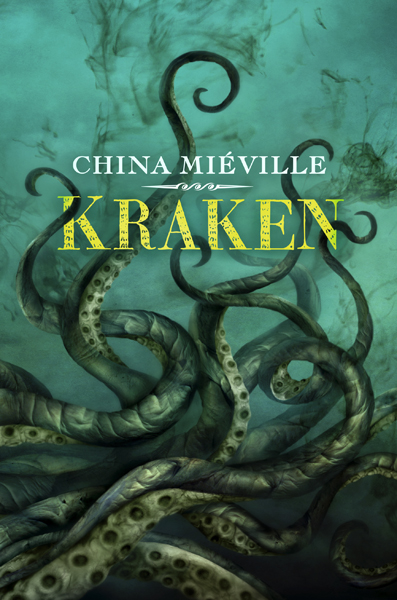
Cover art for China Mieville's Kraken and arts from Joe Abercrombie's The Blade Itself

Here is the cover art for the Subterranean Press limited edition of China Mieville's Kraken:


It looks gorgeous, and the full artwork is also incredible:


I really want to get my hands on this one!

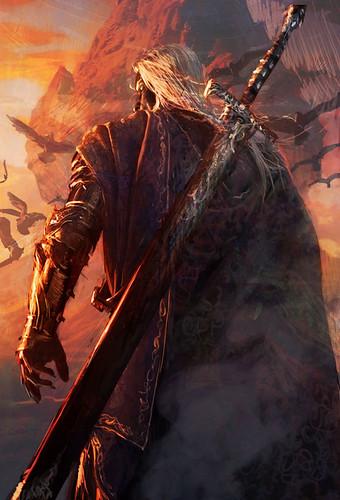
Subterranean also released two arts from the upcoming limited edition of Joe Abercrombie's The Blade Itself:


Those also look very good. It kind of makes me want to just start reading Abercrombie's books right away...

Jul 14, 2010

Malazan: An Introduction, Part II


...continued from Malazan: An Introduction, Part I

While the conflicts of the four Founding races teared the world, a different war raged in Kurald Galain, the Elder Warren of Darkness. Mother Dark, creator of the multiverse, had committed a sin in the eyes of her children - the Tiste Andii - by giving birth to Light. Anomander Rake, her second son, led a small group of his race into the Malazan world, swearing never to return to the mother that turned her face away from her firstborn. Others followed him later, together with their new cousins - the Tiste Edur, Children of Shadow, born from the congress of Light and Darkness. The Andii and Edur fought a war with the already declining K'chain Che'Malle and won, but a betrayal from within led to the near decimation of the children of Darkness. In the end, Anomander Rake's followers were among the few who survived, while the Edur left for a distant land. The Son of Darkness now dwells in a flying mountain called Moon's Spawn, pledging the help of his people to causes not their own, as even though they can use the powers of Kurald Galain, entry to their home Warren is forever denied to them.

Powerful beings walk the Malazan world. Some of them manage to obtain godlike powers and immortality. The paths to Ascension are many, and the Ascendents assume different roles. Some, like Anomander Rake, lead their people, denying their attempts to revere them. Others grasp at godhood, gathering followers or slaves and feeding off their faith. But just as not all Ascendants are gods, the opposite is also true, for there are gods that were never mortal. Some were part of the forces that shaped the multiverse, while others were called into being by the myriad beliefs of civilizations sometimes long gone.

Many other powers form the balance of the world, such as the shapeshifting Soletaken and D'ivers; the sentient Houses of Azath that sprout at random places to imprison in their grasp everything that threatens the order of the multiverse; the draconean Eleint, children of the dragon goddess Tiam and Starvald Demelain, the First Warren; and a plethora of other creatures, races and groups that wage war on each other, form alliances and play in the games of intrigue that span worlds and centuries.

***

It is easy to lose oneself in the labyrinth of the Malazan world, with its myriad factions, ridiculously overpowered characters and ceaseless conflicts. What I've spent two posts in describing is never presented in such a synthesized form. Steven Erikson never explains anything outright, and sometimes different points of view present conflicting information. And yet, it is all there, and it quickly starts to make sense. Even when you feel you've been thrust in the middle of an unfamiliar place with its unfamiliar history and a vast cast of characters you know nothing about at the beginning of Gardens of the Moon, the story just propels you forward, until suddenly you realize this grasping for firm knowledge is unnecessary. Because, especially in the first half of the Malazan Book of the Fallen, you become part of this world. And as such, you can't ever truly know the whole picture - not until you've lived through it.


Next: Malazan: The early books - Genabackis

Jul 13, 2010

Malazan: An Introduction, Part I


I was first introduced to the Malazan Book of the Fallen around the time that book five, Midnight Tides, was coming out. By that time my fantasy experience had been pretty standard, with names like Jordan, Martin and Feist comprising the core of my knowledge of the genre. Then along came Steven Erikson and knocked me off my feet, changing my whole perspective of the field. Here was a series of such epic proportions, a vast world of such immense historical depth, and a cast of characters of such magnitude and diversity, that I could not believe a single person could have invented it. I was later to learn that it were actually two people that invented it, but at the time Esslemont's name was still unknown.

I fell in love with the series, and it bordered on religious adoration until book six, The Bonehunters arrived. Even then I retained most of my good feelings for the Malazan world, but then came books seven and eight, and the magic was mostly gone. But the journey is not over (and neither will it be over when the final tenth installment of Book of the Fallen comes out, since there are many more tales in this universe), and I am yet to read book nine too. But although my feelings for the series are somewhat colder now, I still consider the first five books to be among the greatest examples of what Fantasy has to offer. There has never been another work in the genre that deals with events of such magnitude, on such a broad scale and with so many fully developed characters.

So I decided to write a series of posts on the topic. Not exactly reviews, although the latter ones may turn out to be such, but more an overview of the Malazan world. I am not entirely sure how many posts there will be, although I am guessing the number will be around five or six. There will be no spoilers, although some of the stuff written bellow might be more fun to dig out on your own. Still, I'd like to think that it is safe to read my ramblings without fear that they would ruin your enjoyment of the books if you haven't read them yet.

And here we go.

The Malazan world is a place of ancient secrets and devastating cataclysms. Powerful godlike beings dwell on its many continents among races both old and young, human and inhuman. It is a world of layers, where what has happened before never disappears, but sleeps under the feet of civilizations rising and falling for hundreds of thousands of year, waiting to be awakened. It is the center of a multiverse created by Mother Dark, one through which the blood of an Elder God flows freely to create the streams of magic.

As the story begins, we are introduced to the powerful Malazan Empire. A century ago a band of rogues captured a small pirate island off the coast of the continent of Quon Tali. Led by the charismatic Kellanved, those extraordinary people created the heart of what was to be a power to conquer half the known world within less then three generations. At the time of the first book, the Empire controls three continents and wages wars of conquest on two others. Its armies are the finest fighting force in the world, as the brilliant Malazan leaders have paid heed to the lessons of innumerable civilizations that have preceded them. But the Empire is only the beginning for its creators.

Outside, inside, over and under this world are the Warrens - pocket dimensions, through which mages can both travel and access their magic. Some of the Warrens are aligned to an element or a god. Others are the birth places of the world's races. Many are not accessible to humans. They are both places and the road to places. Sources to power and knowledge. And some of them have preceded the Malazan world itself. Magic is always fluid in the Malazan series. There is the ordered system of the Warrens. But there is also the magic of ancient spirits and shamanism. There is the power of faith and symbolism, and there is the power of curses that span millenia. And those often merge to create mind-blowing effects, especially in the first few books.

The Malazan world is populated by many sentient races, and all of them are original creation of Erikson and Esslemont. No elves and dwarves here. First, the Four Founding races:

The ancient prehistoric progenitor of humanity, the Imass, made the ultimate sacrifice to wage a war of utter extinction on beings who had the power to trap whole continents in a prison of ice. They became the undead T'lan Imass - immortal and indestructible creatures of dust and fire who can not find rest as long a single one of their enemies still breaths. But the mortal was never meant to endure the weight of immortality, and as hundreds of thousands of years pass, the T'lan Imass' souls have turned to dust, and of memories of ice.

The Jaghut were once the rulers of the world, after the decline of the K'chain Che'Malle. Creatures of Omtose Phellack, the Elder Warren of Ice, they were forced to live alone by their own power, as the conflicts between Jaghut could tear down continents. As they themselves had once been slaves, so too did they enslave the hapless Imass, posing as gods for no other reason but the joy of control. Too late the Jaghut realized the threat that loomed beyond the horizon, and even as the last Jaghut Tyrant was cast down by his own kind, the immortal T'lan Imass emerged to drive their race to near extinction. Three hundred thousand years later the immortal Jaghut still pay for their hubris.

Little is know of the lizard-like K'chain Che'Malle, except for the fact that they came from beyond the stars, and used technologies that the world has not yet rediscovered. Their Matrons possessed powerful magic and utter control over their broods. Until a new experimental breed turned too volatile to control, and the ensuing civil war destroyed the K'chain Che'Malle civilization, opening the way for the emergent Jaghut.

Even less is known of the mysterious Forkrul Assail. They were creatures of limitless power, almost indestructible, with tremendous physical strength and near impervious to magic. The Assail never formed any sort of culture, nor did they have connections to the other races of the world. Obsessed with balance, their only interaction with others was to come when imbalance was perceived, to unleash a genocide of apocalyptic proportions and then vanish again. At the time the series takes place they have disappeared, although some remain in remote places.


To be continued...


Next: Malazan: An Introduction, Part II

Jul 12, 2010

The Dervish House - Ian McDonald


Ian McDonald has long been a part of my Pile of Shame - the books and authors I've always thought I should read, but somehow never gotten around to. In his case, I tried tackling Desolation Road a few months back, but for some reason I just lost interest halfway through, even though I enjoyed it quite a lot until that point. The Dervish House, then, was to be the novel to acquaint me with McDonald. It is his third "ethno" work after River of the Gods and Brazil, and it has generated an avalanche of on-line praise, so the timing was perfect.

Istanbul, in the year 2027. Twenty million people live there, and it is still the Queen of Cities, a crossroads of worlds and religions, a maze of ordered chaos and quiet cacophonies, of petty dramas and grand designs. A city where the old and the new, the mystical and the futuristic embrace in prayer around its many mosques. Turkey has become part of the European Union, and a major player in the nanotechnology field.

A suicidal bomber in a tram heralds the beginning of life-changing events for six people. A rogue trader prepares himself for the scam of the century. His wife, an owner of an art gallery, sets on a mission to discover a legendary treasure hidden somewhere in the great city. A young marketing graduate is hired by a family business that could change the world, but she has only five days to save it. A nine-year old boy with a heart condition that forces him to wear ear-plugs, thus stealing all sound from his world, becomes the accidental witness to the beginnings of a conspiracy, and turns into the Boy Detective. His friend, a retired Greek economist, is hired into a military think-tank, but he has to battle old demons before he could face new ones. And a good-for-nothing slacker caught in the tram accident starts seeing jinn, and becomes a new man. All those lives intertwine as Istanbul plunges into a five-day heat-wave, to weave a tale of dirty deals, nanotechnology and a whole new kind of terrorism.

Ok, so I want to come clean before I continue. It took tremendous effort on my part to finish The Dervish House, and in the end, it was sheer stubbornness and determination that prevented me from giving up on it. Not for a second did a sympathize with any of the characters, and the story started to actually go somewhere only in the last seventy pages.

Now, don't take me wrong. Ian McDonald is obviously a very talented writer, and even if the present tense he uses in the novel is a bit tiring at times, his style is beautiful - rich and vivid, playing with rhythm and phrase in a multitude of ways. Alas, I could never feel his Istanbul. Not in any real sense, even though it is evident that he has put a lot of effort and knowledge into building the atmosphere of the city. And his work seems to have payed off, as many on-line reviewers point mid-twenty first century Istanbul as one of the strongest aspects of the book. To me, it remained just a random place that nothing was happening in for three hundred pages.

The characters are given small segments of a couple of pages each, before McDonald moves on to the next one. That means we follow all of their stories pretty much simultaneously, but it also means that none of those stories actually move. The Dervish House is split into the five days of the heat-wave, and chapters plod ponderously over the hours, as little snippets of different lives are shown in painstaking detail, with all the atmospheric minutiae that I would love, if they actually did it for me. Considering that I turned out to be immune to McDonald's atmosphere-building and character-developing skills however, all I was left with were six separate stories that seemed to go nowhere, lacked anything to make them even a little exciting, and when the final seventy pages finally kicked in, and the stories started to merge, I wished that we had arrived there a lot earlier. Plot-wise the book needs anywhere between a hundred and fifty, and two hundred pages less.

Honestly, I am somewhat saddened. I really wanted to like The Dervish House, and to become a fan of McDonald's writing. I still do, actually, and after some time has passed, I will most likely try and read others of his books. He seems to be exactly the type of writer that I respect ia like. Yet, even if nothing in The Dervish House touched me in any way, it is a good book, and I can appreciate that a tremendous amount of effort and thought has been put into it. Also, considering all the stellar reviews over the Internet, I suspect I am in the minority here, so my advice would be for you to try it out for yourself. What it didn't do for me, it might do for you.

7/10

Jul 11, 2010

Soulless - Gail Carriger


I don't know what drew me to Soulless. Could be the mixture of steampunk, vampires and werewolves; or maybe the Victorian setting, which I really love. Or possibly the little Lovecraftean octopus thingie on the spine. Whatever the reason, I ended up reading a supernatural vampire/werewolf -slash- urban fantasy with a "some name novel" over the title, no less! - something I'm usually averse to. But what a pleasant surprise it turned out to be!

Alexia Tarabotti is a twenty-something spinster with Italian blood, coming from a family of the London middle-high society. She lives in a world where ghosts, werewolves and vampires have become public, to take place at the top of England's aristocracy, working in concert with the Crown. They are supernaturals: people with "too much soul", which allows them to survive the transformation - the bite of a werewolf or a vampire hive queen. Very few have this abundance of soul, and no one knows if they are the lucky ones until the transformation begins. Still, a lot of hopefuls strive for immortality and serve the vampire hives and werewolf packs as drones and clavigers respectively.

Alexia is the very opposite of the supernatural. She is a preternatural, a person with no soul at all, which not only means that she is immune to any supernatural threat, but also that her very touch is a deadly weapon - while she is touching a vampire or a werewolf, they revert back to normal humans for as long as the contact lasts. In the case of ghosts, the touch destroys them completely. In the past, preternaturals have been hunters of the creatures of the night, but nowadays the knowledge of their existence is all but lost. Alexia is a subject of interest to BUR - Bureau of Unnatural Registry (the supernaturals' governing office) - and sometimes helps their leader - the Alpha of Woolsey Pack, Lord Connal Maccoon - with special cases, much to his annoyance. But when she is attacked by a starved vampire who obviously knows nothing of either the laws, or proper behavior in cultured society, both Alexia and Lord Maccoon become entangled in a conspiracy that threatens the whole supernatural community. They are forced to work together despite their mutual dislike, and the result is nothing if not outrageous.

Soulless is an urban fantasy of the romantic variety. Although the story is engaging, the real point of the novel - apart from some pretty decent world-building - is the budding relationship between a strong-willed London woman of unusual origins, and a barely cultured nobleman who could tear a horse in two with his bare hands. The combination is explosive and at times hilarious, and even if the reader knows right from the beginning how that part of the story will end, it is still highly entertaining to read the verbal dueling between the two main characters.

Gail Carriger tries to tread the path of Susanna Clarke, and even though her style of writing is nowhere near the immaculate pseudo-Victorian beauty of Jonathan Strange & Mr. Norrell, she still manages to playfully imitate the posturing, conventions and politeness of expression of the high society of that era. Her attempts are at times clumsy, and at other times way too in-your-face, but for the most part Soulless creates a great - if a bit comical - atmosphere of an English aristocracy that manages to be quite the same foppish and pretentious bunch of gossiping bigots as it was in real life, despite the presence of the undying among them.

All in all, Soulless is a pretty good read, and delightfully playful one. There is enough action, romance, balls and lace to satisfy anyone, and even some horror here and there. The concept of the vampires, werewolves and their servants is also well developed, and the only reason not to like the book would be a (completely reasonable) dislike for supernatural romance. However, as a fellow hater, I can assure you that Carriger doesn't let herself get carried away, and both Alexia and Lord Maccoon are way too likable characters to annoy the reader with their clumsy flirting.

So, if you are into urban fantasy, and/or supernatural romance, and/or pseudo-Victorian language and style of writing, then Soulless is a must. Even if one of the three does not apply, you should still give it a try. I doubt you'll be sorry.

7.5/10

Jul 10, 2010

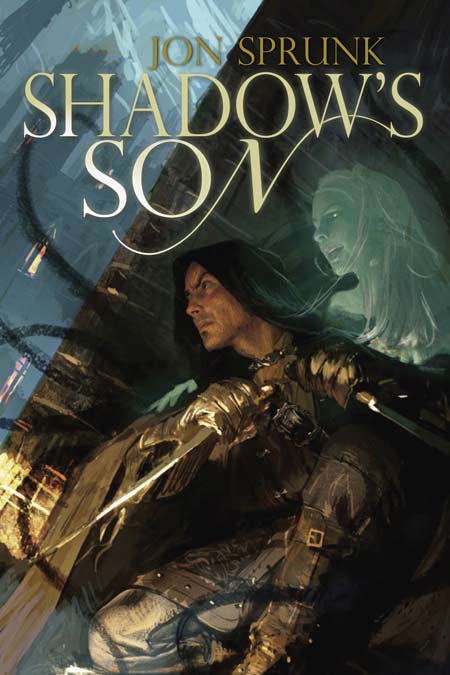
Shadow's Son - Jon Sprunk


In my own private world the assassin with a heart of gold is almost as big a cliche as the similarly-inclined whore, and perhaps even more annoying than the poor wench. I have never been able to understand some people's infatuation with ruthless killers that end up saving the day while being very mean and bad-ass about it. Somehow it always rings false to me. However, I have a soft spot for newcomers, and so I decided to acquaint myself with Jon Sprunk and his debut novel, Shadow's Son.

Caim is an assassin with an appropriately tortured past, plying his trade in the corrupt city of Othir - capital of the Nemean Empire, ruled by the Church of the True Faith, after a coup that disposed of the last Emperor seventeen years ago. When a routinely-looking job goes wrong, and people begin to die left and right (that is, without Caim's help), he becomes entangled in the intrigues and ambitions of the nobility and the Church. His only allies are Kit - a mysterious spirit woman that only he could see and hear, who has been his companion since early childhood - and Josephine, daughter of his last target. Now the assassin has to fight not only for his life, but also for the girl he has been tied to, and the city he secretly loves. But to stay alive, Caim might be forced to call upon a power hidden deep inside him - one that he has spent his entire life trying to deny. The power of shadows.

Shadow's Son is a fast-paced action ride. Like most assassin fantasy novels out there, it could easily be put under the Young Adult flag, if it wasn't for the blood, gore and violence factor. The characters are clich... archetypes, their motivations simple and clearly stated in POVs and dalogues. The story is straightforward, and even though the plot is intrigues-ridden, it all really boils down to who is going to murder whom first. Sprunk's style of writing drags a little at the beginning, but the book soon finds its stride and becomes engrossing page-turner. The action scenes (mostly duels with swords and knives) are good, even if they couldn't compare to Scott Bakker's flowing descriptions or David Gemmell's dynamic sequences. However, as someone who has had the dubious honor of translating Richard A. Knaak' s game tie-ins in another language, I think I am qualified enough to say that Jon Sprunk's fighting scenes are among the more successful in the genre.

Where he fails though, is the world-building and history of his world. Although only a part of a series, Shadow's Son should have been able to give way more flesh to the setting, and to some recent events. We get no real feeling of the Empire, and even though certain on-going wars and exotic neighbors are mentioned, they never appear a second time and the reader is left hanging. Even Othir herself gives the impression of being comprised of one poor street, one rich street, a half-finished cathedral, an Evil Castle and Another Evil Castle. Nothing like the fleshed-out Luthadel from Brandon Sanderson's Mistborn, or Scott Lynch's Camorr from The Lies of Locke Lamora. The real threat to the Empire is also just vaguely shown - the supernatural Shadow and its servants from the Other Side seem really interesting - but I guess it will play a bigger role in next installments. Then we have the Evil Chirch of Evil, which oppresses everyone and is at the root of all the characters' dramas EVER, but we never learn anything about the regime it replaces (supposedly it wasn't better), or even what the Chirch's dogmas are, beside the fact that it is pseudo-Christian and very corrupt. And we really should have more information, considering how crucial it is to the plot.

In the end, those are not book-ruiners though. True, Shadow's Son lacks depth of world and history, but it more than compensates with non-stop action and an Evil Conspiracy plot (if a bit simplistic one) of the type that makes you devour every page until you reach the inevitable convergence. I have to admit that Jon Sprunk's fascination with sodomy struck me as curiously morbid (or, as Kruppe would suggest, morbidly curious) - as I consider it a really strange city guard, whose members' first instinct when they catch an adolescent thief is to try and rape him - but that is not a book-ruiner either.

What ruined the book for me, was one scene toward the end, where Sprunk crossed the border between violent-but-simple-and-entertaining-assassin-fantasy, and unsettlingly-disgusting-and-"gritty"-showing-the-ugliness-of-the-world. I'm talking full on Terry Goodkind disgusting. I won't spoil the "fun" for anyone. Suffice to say I don't consider myself a prude, and in the right book this kind of development would be perfectly fine with me. Shadow's Son just isn't the right book for it. And I simply didn't like it as much after this scene.

That said, Jon Sprunk's first novel is engaging and light read, and one that leaves you wanting more. I don't expect that Shadow's Son will be among the best debuts I've read this year, but I will definitely read the sequel, when it's out. The author has undeniable potential, and if he develops his world and gives it a few historical layers - and if he could also refrain from gratuitous "grittiness" - this could turn out to be a truly great series.

7/10

P.S. There is a whore with a heart of gold in Shadow's Son. True story.

Jul 9, 2010

Mistborn: The Final Empire - Brandon Sanderson


I heard about Brandon Sanderson a few years ago. The reviews were always praising, especially in terms of world-building and magic systems, and being the nerd that I am, those are pretty attractive to me in fantasy. However, when I started reading Elantris, I just couldn't get into it and gave up a hundred pages through. Then I bought Mistborn (or The Fnal Empire, depending on which edition you read) at JFK airport, and immediately loved it.

Reading Brandon Sanderson right now is a little like listening to Muse after the Twilight movies. Sure, he wasn't a nobody before, but he wasn't nearly as famous as he has become in the last two years either. And if you tell anyone you are reading his books now, they'll smirk and say you only do it because of his work on The Wheel of Time. But to me, it was the other way around. I was happy he was the one to finish Robert Jordan's magnum opus because I knew how good he is.

If I have to find a niche in the genre to put Brandon Sanderson in, that would be the same place occupied by David Gemmell (may he rest in peace), the one Raimond Feist vacated when he went the way of Salvatore and Brooks - the road of endless tired sequels, one every three months or so... It is the niche of high fantasy, of adventures and magic, and of characters that would be cardboard in the hands of a lesser author, but who in Sanderson's writing have just enough of that little spark that makes us care for them.

Mistborn is set in a setting that is rarely explored in fantasy. A long time ago, a great threat loomed over the lands, and a hero rose to defeat it. Many united under his banner, and he was the last hope of the world.

He failed.

It is now a thousand years later, and the land is covered by ash, spewed endlessly by active volcanoes. When darkness falls, unnatural mists envelop everything, and strange creatures lurk inside them. This is the time of the Final Empire, held in the iron fist of the Lord Ruler - an immortal god-like being that has controlled humanity for a whole millenium. Under his rule there are only two castes - the nobles, descendants of those that once helped the Lord Ruler ascend to power; and the skaa, slaves belonging to nobility, to do with as they please. Rebellions have been few and far between, and all of them end in total bloody suppression.

But now a new kind of rebel appears. One with the means and will to end the Final Empire once and for all, by striking at its heart - the Lord Ruler himself.


The story centers around the skaa rebellion in Luthadel, capital of the Empire. Even though it is a part of a trilogy, Mistborn is actually self-contained; the next installments in the series broaden the concept, revealing new layers to the world, previously hidden by the Lord Ruler's reign. And as a stand-alone book, it shines. It has everything a high fantasy needs: intrigues, lurking in the dark, amazingly cinematic fighting sequences... and magic.

Magic in this world is called Allomancy. An Allomancer is a person who ingests little slivers of metal and then "burns" them in his body, producing a specific effect. There are a number of metals, each working in opposing pairs: one gives you the ability to pull metals, another - to push them; one detects Allomancy, another hides it. This power is extremely rare, and only flows through the blood of some members of nobility, which is the reason for a law that states that any nobleman who takes a skaa lover has to kill her after, to avoid the power being given to the slaves. Of course, this doesn't always happen the way it should, and thus the unlikely cast of characters that shape the events of Mistborn. There are two kinds of Allomancers - those who could burn only one metal are called Mistings. There is, however, an extremely rare number of people, able to burn all metals - the Mistborn.

The magic system is so ordered and used with such precision throughout the book, it resembles more a Science Fiction concept than a Fantasy one. Sanderson obsesses over the interactions between different Allomantic talents, and the result is something that you could imagine so vividly, you almost begin to believe it possible. The action scenes involving Allomancy (that is, nearly all of them) are breathtaking, with people flying, Pulling and Pushing objects to amazing effects.

The story itself is a classic tale of insurrection from within, as the main character Vin - an orphan girl from the street with the powers of a Mistborn - is turned by the rebellion leader Kelsier - also a Mistborn - into a lady from the minor nobility, who he uses to infiltrate the world of the nobles for the purpose of sowing dissent and mistrust. The characters are more or less black and white, although enough nuances exist to make them come to life.

In the end, Mistborn is a greatly satisfying read. It lacks the grand scope of "Hard Fantasy" authors like Martin, Erikson or Bakker, but it does't need them either. Sanderson has written a thrilling adventure filled to the brim with action, intrigue and one of the most wonderfully developed magic systems I've encountered in the genre. I'd recommend it without reservations.

8.5/10